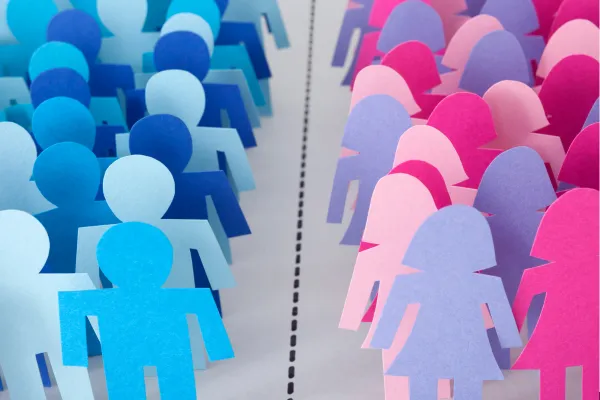
Men vs Women
How Social Media Turned Connection Into Combat
Something strange is happening in today’s world.
Men and women aren’t just misunderstanding each other - they’re starting to resent each other.
Spend ten minutes scrolling through social media, and you’ll see it: endless “men vs women” videos, dating advice accounts teaching manipulation disguised as empowerment, and algorithm-driven echo chambers convincing people that the opposite sex is the enemy.
It’s no wonder so many people feel disillusioned with love, frustrated with dating, and disconnected from genuine human understanding.
We’re not just living through a relationship crisis - we’re living through an empathy crisis!
And social media, combined with low emotional intelligence (EQ) and unresolved trauma, is quietly fuelling this great divide between men and women.
The Power of Social Media Algorithms
Social media was never built to help us understand each other - it was built to keep us scrolling - Please keep this in mind!
Every like, comment, and angry reaction teaches the algorithm what makes you tick. It learns what provokes you, what validates you, and what keeps you engaged, and then it feeds you more of it.
At first, it feels harmless. You like one video about “red flags in men” or “why women can’t be trusted.” Before long, your entire feed becomes a battlefield - men on one side, women on the other, both convinced they’re right.
But here’s what’s really happening beneath the surface:
Your beliefs are reinforced, not challenged. Because the algorithm doesn’t care about truth, it only cares about retention. Outrage is what keeps you online.
You’re seeing two completely different worlds. Men and women are no longer seeing the same picture. Each feed tells a different story, pointing the finger at the other side.
Echo chambers take over. The more one-sided content you engage with, the smaller your world becomes. It starts to feel like everyone agrees with you - but in reality, they don’t.
Example: A man scrolling TikTok might see endless videos about “toxic femininity” and “how modern women bring nothing to the table.”
Meanwhile, a woman’s feed is filled with “how to spot a narcissist” and “why all men cheat.”
Both leave feeling validated and furious.
Social media isn’t just dividing opinions anymore. It’s dividing hearts. It’s replacing curiosity with confirmation bias, nuance with noise, and understanding with outrage.
Because the truth is this! - these platforms don’t profit from peace. They profit from polarity.
The Decline of Curiosity
One of the most alarming casualties of the digital age is curiosity.
People are no longer asking questions like:
“Could there be another side to this story?”
“What pain might be behind this person’s behaviour?”
“Am I contributing to this dynamic in any way?”
And increasingly, people are forgetting to ask another vital question:
“Is the person who created this post or video actually qualified to talk about this?”
We’ve reached a point where millions are forming beliefs, opinions, and even identities around information they’ve consumed from unregulated, unverified, and often unqualified sources.
Social media doesn’t require credentials - anyone can post anything, and many do.
Some are trained professionals sharing grounded, research-based insights.
But many are simply voicing personal opinions, unresolved pain, or emotionally charged perspectives and then presenting them as truth.
With the rise of AI-generated content, even authenticity itself is now questionable. Videos can be manipulated, quotes fabricated, and “experts” created from thin air.
And yet, because our brains crave validation, we often accept what aligns with our existing beliefs - without stopping to question where it came from.
This is why curiosity is so essential. It’s not just about questioning others - it’s about questioning our own consumption habits.
Before sharing or internalising something, we need to ask ourselves:
“Who created this, and what qualifies them?”
“Is this based on evidence or just emotion?”
“Am I hearing one perspective, or am I exploring multiple?”
Curiosity is the foundation of connection - but also of critical thinking.
Without it, we lose discernment. We stop seeking understanding and start swallowing narratives whole.
When curiosity dies, empathy follows.
And that’s when genuine dialogue between men and women - and even within ourselves begins to fade.
Low EQ and the Avoidance of Self-Development
There’s another force at play here, and it’s one we don’t talk about enough: low emotional intelligence (EQ).
Emotional intelligence is what allows us to understand, manage, and express our emotions in healthy ways - and to do the same for others. It’s what creates empathy, safety, and trust in relationships. But today, we’re seeing a cultural decline in EQ and it’s showing up everywhere!
When EQ is low, people stop reflecting and start reacting. Instead of asking “What can I learn from this?”, they look for someone else to blame.
Rather than seeing relationships as mirrors for growth, they see them as battlegrounds for control.
Because doing the inner work - facing your triggers, unpacking your patterns, regulating your emotions - is uncomfortable. And discomfort is exactly what people with low EQ try to avoid.
Here’s how low EQ shows up in real life:
Defensiveness: reacting to feedback as an attack instead of an opportunity. When someone says, “That hurt me,” the low-EQ response is, “Well, you’re too sensitive.” The secure, high-EQ response is, “I didn’t realise that impacted you. Tell me more.”
Projection: seeing your own wounds mirrored in your partner’s actions. For example, someone who feels unworthy might accuse their partner of “losing interest” every time they need space, when really, it’s their fear of abandonment being triggered.
Avoidance: running from discomfort instead of reflecting on it. This might look like ghosting, silent treatment, or keeping conversations surface-level to avoid vulnerability.
Emotional reactivity: letting feelings drive responses instead of awareness guiding them. Someone with low EQ might explode, withdraw, or manipulate to regain control rather than sitting with the feeling and communicating it healthily.
External validation: needing constant reassurance or approval because emotional self-regulation hasn’t been developed.
Low EQ doesn’t just damage relationships - it distorts how we experience love itself. It teaches people that connection is unsafe, that vulnerability equals weakness, and that the goal of communication is to win, not to understand.
But real healing begins when we stop pointing fingers and start asking:
“What part of me still needs to grow?”
“How can I respond differently next time?”
“Am I seeking to be right, or to be real?”
Developing EQ isn’t about becoming emotionless - it’s about becoming emotionally responsible. When we learn to regulate our inner world, we stop projecting chaos into our outer one.
The Role of Unresolved Trauma
Behind almost every defensive, angry, or emotionally shut-down person online is one thing most people never see - unresolved trauma.
Trauma doesn’t just live in memories; it lives in the body, the nervous system, and the way we relate to others. It subtly dictates how we perceive safety, connection, and trust.
And here’s the part few people talk about:
Unresolved trauma directly impacts emotional intelligence.
When trauma is running the show, a person isn’t functioning from a place of connection - they’re functioning from a place of protection.
That means their reactions, communication, and even beliefs are filtered through a survival lens. They’re not thinking, “How can I understand or connect with this person?”
They’re thinking, “How can I stay safe?”
And when your body and mind are wired for protection, it’s almost impossible to practise the core skills of emotional intelligence:
Self-awareness (because trauma blurs emotional clarity).
Self-regulation (because the nervous system is constantly in fight, flight, or freeze).
Empathy (because safety is required before we can genuinely attune to others).
Healthy communication (because vulnerability feels like danger, not intimacy).
This is why healing trauma must come before rebuilding emotional intelligence.
EQ isn’t something you can just “decide” to improve - it grows naturally once your system no longer feels under threat.
Think of it like this: You can’t learn to swim if your brain still believes you’re drowning.
When you start to heal, your nervous system gradually shifts from survival to connection.
You begin to recognise your triggers instead of reacting to them.
You can sit in discomfort without exploding or withdrawing.
And empathy becomes safe again - both for yourself and for others.
Only then can emotional intelligence truly take root.
Trauma work and EQ development are not separate paths - they’re the same journey, walked in stages.
Healing the trauma is what creates the emotional space to grow the EQ. And growing your EQ is what allows that healing to become your new normal.
The Damaging Impact on Mental Health and Self-Worth
The divide between men and women isn’t just social - it’s psychological.
Constant exposure to polarising content breeds deep emotional fatigue - it wears down the nervous system and rewires how we think about love, trust, and connection.
Here’s what that looks like:
😔 Anxiety - from the endless comparison, rejection, and fear of not being “enough.” When every scroll tells you what men or women should be doing, how relationships should look, and what your worth should depend on, it creates a constant pressure to perform rather than connect. Your nervous system becomes hypervigilant - scanning for red flags, mixed signals, or signs you’re being used - even when none exist. This chronic state of alertness makes it hard to relax into love or see others clearly.
💔 Loneliness - because trust becomes harder when every narrative tells you the opposite sex is out to harm you. The more you internalise the message that “everyone is toxic” or “all men/women are selfish,” the more guarded you become. Walls go up, vulnerability goes down, and even genuine, kind-hearted people start to feel unsafe. The result? Isolation masquerading as independence. You might tell yourself you’re “better off alone,” but deep down, it’s not empowerment - it’s protection.
🌧️ Hopelessness - the belief that real love, connection, and understanding are dying out. When algorithms feed you daily proof that relationships don’t last, that people cheat, and that kindness gets taken for granted, it chips away at your faith in humanity. You start to wonder if healthy love even exists anymore - or if you’re foolish for still wanting it. That quiet despair makes it easy to give up on dating, stop trying, or emotionally detach as a form of self-preservation.
And yet, underneath all of it, what most people are really craving isn’t dominance or validation - it’s safety, understanding, and connection.
We’re not designed to thrive in a world that constantly pits us against each other. The more disconnected we become from empathy, the more our mental health and self-worth pay the price. These beliefs quietly corrode self-esteem. When you start seeing relationships through the lens of fear, you unconsciously attract situations that reinforce that fear.
It becomes a self-fulfilling prophecy:
“All men leave.”
“All women manipulate.”
“It’s safer not to care too much.”
And the algorithm nods along, feeding you more “proof.”
But underneath the cynicism, what most people are really saying is:
“I’m scared, and I don’t know how to trust again.”
That fear - not anger - is what sits at the heart of the great divide.
Because when people feel unsafe, they protect instead of connect. They attack instead of express. They generalise instead of empathise.
Healing begins the moment we stop defending our pain and start understanding it.
When we can admit, “I’m hurt, not hateful,” everything changes.
From that honesty, growth becomes possible. We start recognising that our triggers are not proof of danger - they’re invitations to heal.
And that’s where true emotional maturity begins - when we stop letting fear dictate our narrative and start learning how to trust again, both in ourselves and in others.
Healing the Divide: Curiosity, EQ, and Emotional Growth
So, where do we go from here?
Healing the divide between men and women starts with self-awareness - not messy social media debates.
Here’s what we can each start practising:
🔹 Get curious again
Don’t assume. Ask questions. When something triggers you online, pause and wonder, “What’s this touching in me?”
🔹 Challenge the narratives you consume
If all your content paints one gender as the villain, your feed isn’t “truth” - it’s programming. Start unfollowing the accounts that fuel outrage, and follow those that inspire awareness, growth, and understanding instead.
🔹 Develop your emotional intelligence
Learn to recognise, regulate, and express your emotions safely. Emotional intelligence isn’t just a buzzword - it’s the foundation of real intimacy. Get comfortable with being uncomfortable, connect deeply with yourself first, and everything else will follow.
🔹 Heal your trauma
Therapy, coaching, self-reflection - whatever path you choose, healing helps you respond with awareness rather than reacting from pain. Do the inner work first, and peace, empathy, and love naturally follow.
🔹 Choose empathy over ego
When we understand that every harsh comment, defensive post, or cynical video often comes from pain, we start relating differently.
Because empathy doesn’t mean agreeing - it means seeing the humanity behind the hurt.
Here’s the Truth
Men and women were never meant to be enemies - they were meant to be mirrors.
What we’re really witnessing online isn’t a gender war; it’s unhealed pain, amplified by algorithms and echoed back through millions of screens. It’s trauma, distrust, and emotional immaturity being projected outward instead of healed inward.
Social media may be fuelling the misunderstanding, but it doesn’t have to define the future of love, connection, or humanity.
Because the truth is - we can’t heal what we keep blaming.
If we each commit to raising our emotional intelligence, healing our wounds, and getting curious instead of combative, we can start bridging the gap - one honest, heart-led conversation at a time.
So the next time a post or video sparks frustration, pause before you react and ask yourself:
“Is this truth… or just my algorithm talking?”
“Am I being curious, or am I seeking validation for my pain?”
If this resonated with you, here are two ways I can help you start healing and reconnecting - both with yourself and others:
1. Build Emotional Intelligence (EQ) and Deepen Connection
If you want to know what your current level of EQ is, and receive a personalised, in-depth report breaking down in detail where you thrive and where you need to grow - book an EQi Assessment with me here:
👉https://calendly.com/rpfoxcoaching/eq-i-assesment
This assessment will help you understand your emotional patterns, strengthen your self-awareness, and give you the tools to create healthier, more fulfilling relationships.
✨ 2. Discover Your Attachment Style (Free Quiz)
If you’d like to start with something simple, take my free Attachment Style Quiz here:
👉 https://rebeccapfox.com/attachment-style-quiz-form
Once you know your attachment style, you’ll uncover the core wounds and behaviours that may be causing you to disconnect and how to start healing them.
Because the more we understand ourselves, the more compassion we have for others.
And compassion is what rebuilds the bridge between men and women.
It’s time to stop blaming and start understanding.
Because empathy - not algorithms - will heal the divide.
Rebecca P. Fox
Psychotherapist | Educator | Author | Survivor


